Virtual Staging Before and After: Why This Format Wins with Buyers
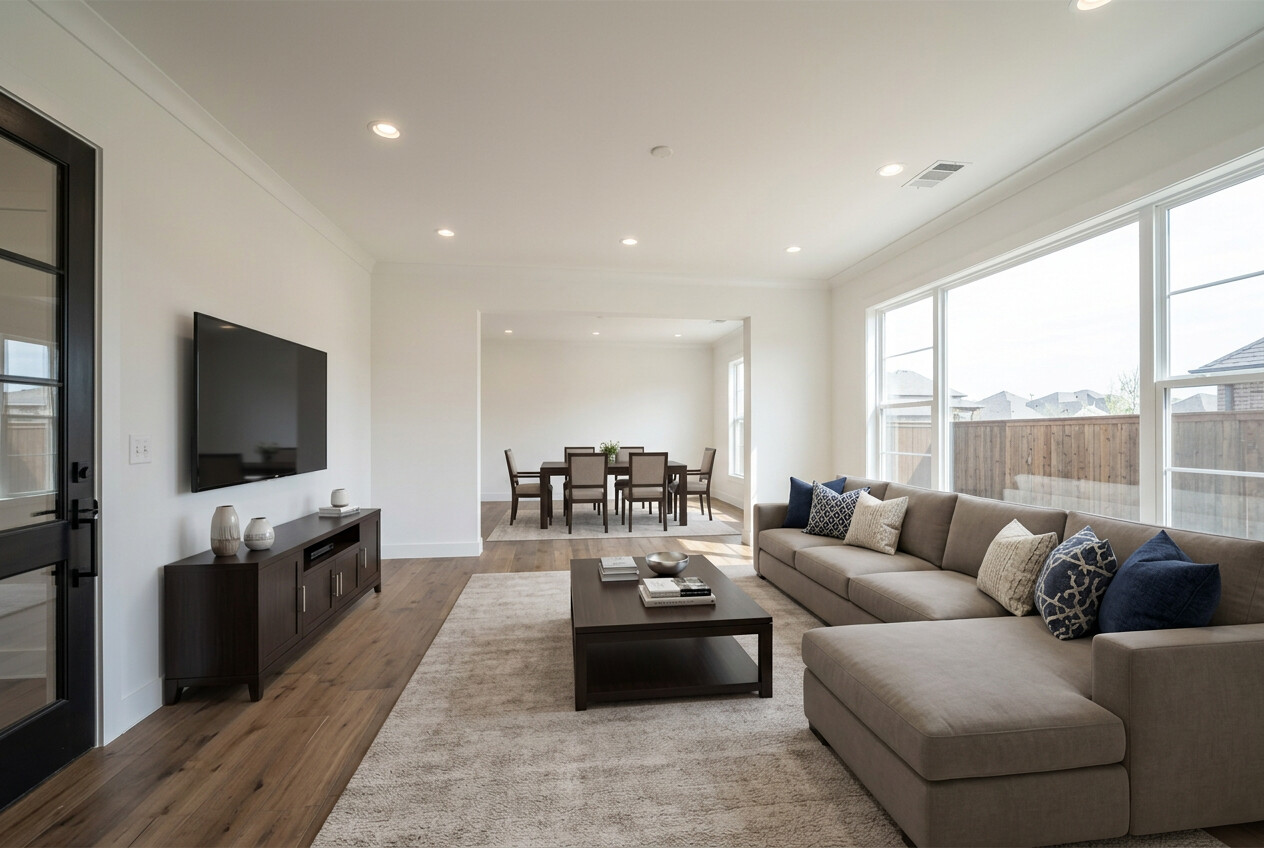
A beautifully staged living room photo grabs attention. But a virtual staging before and after pair? That closes deals.
The difference matters more than most agents realize. Showing a staged photo on its own raises questions. Showing the original room right next to it answers them. Buyers get the vision and the reality in a single scroll.
This is not just a design preference. It is a compliance strategy, a trust signal, and the highest-performing content format in real estate marketing right now.
Buyers Do Not Trust Staged Photos Alone
Browse any real estate forum and you will find the same complaint: buyers feel misled by virtual staging when they walk into an empty house. The phrase that comes up constantly is "huge letdown." They saw a furnished room online, drove across town, and found bare walls.
That frustration is not about the staging itself. It is about the gap between expectation and reality.
Before and after solves this. When a buyer sees the empty room alongside the staged version, they understand exactly what they are looking at. The original photo grounds their expectations. The staged photo helps them picture what the space could become.
One Reddit commenter put it simply: it works when listings show unstaged and then staged in the next picture. That is not a design opinion. It is buyer psychology in action.
The Transformation Narrative Builds Trust
There is a reason home renovation content dominates social media. People love seeing a space go from unremarkable to beautiful. The transformation itself is the story.
Virtual staging before and after taps into the same psychology. The empty room is the "before." The staged room is the "after." The buyer's brain fills in the narrative: this is what I could do with this space.
That narrative does something a standalone staged photo cannot. It makes the staging feel honest. The buyer is not being tricked into believing furniture exists. They are being shown a possibility, with full transparency about the starting point.
That transparency matters at the showing, too. A buyer who has already seen the empty room isn't surprised when they walk in.
California Already Requires It
California's AB 723, in effect since January 1, 2026, requires a disclosure on digitally altered listing photos and access to the unaltered original, either the photo itself or a link to it. CRMLS's rule FAQ asks for the original right before or right after the altered image.
This is not a suggestion. It is the law.
Other places are moving toward disclosure, if not always toward requiring originals. Wisconsin's 2025 Act 69 requires disclosing technology-altered advertising starting in 2027, and NAR's Code of Ethics already bars misleading images. Our guide to virtual staging and MLS rules covers the details.
Agents who adopt this format now are not just following best practices. They are ready if similar rules reach their market.
MLS Compliance and Misrepresentation Protection
Beyond state law, MLSs have their own rules about virtual staging. The ones we've reviewed commonly require:
- Clear labeling that photos are virtually staged
- No structural alterations in staged images (removing walls, changing windows, hiding damage)
- In some cases, like CRMLS in California, the original photo next to the staged one
The before and after format covers all of these, as long as you also label the staged photo the way your MLS asks. The original photo proves nothing was hidden. The staged photo shows only furniture and decor additions. Side by side, there is no ambiguity.
This matters for liability. Misrepresentation claims in real estate are expensive and career-damaging. An agent showing only staged photos has a weaker defense than one who paired every staged image with the original. The before and after format is documentation that you disclosed accurately.
Room-preserving staging, where the AI adds furnishings without altering the structure of the space, pairs naturally with this approach. When the bones of the room are identical in both photos, the comparison is clean and the compliance case is airtight.
The "Disappointment at Showing" Problem
Every agent who uses virtual staging has heard the concern: what happens when the buyer shows up and the house is empty?
This is a real issue. Buyers who only see staged photos sometimes feel deceived at the showing, even when the listing disclosed that staging was virtual. The problem is not dishonesty. It is presentation. A single staged photo, buried in a gallery of 30, does not set expectations clearly enough.
Before and after eliminates this. When the buyer has already seen the empty room online, they arrive at the showing prepared. They know the space is unfurnished. They chose to visit anyway because the staged photo helped them see the potential.
The result: fewer awkward showing moments, fewer negative reviews, and more productive conversations about the actual property rather than about what is or is not included.
Social Media Loves Before and After
If you are posting listing photos to Instagram or TikTok, before and after is not optional. It is the format.
Transformation content is a staple of real estate social media for a reason. A few formats work especially well:
- Carousel posts that swipe from the empty room to the staged room
- TikTok reveals with a quick cut from before to after
- Instagram Reels that show the transformation instead of a static photo
The reason is simple. Before and after creates a micro-story. It has tension (the empty room), resolution (the staged room), and an emotional payoff (imagining life in that space). Single photos do not have that narrative arc.
For agents building a personal brand or marketing a listing beyond the MLS, before and after content is cheap to make and easy to understand.
How to Present Before and After Across Channels
The format works everywhere, but the execution varies by platform.
MLS Listings
Place the original photo immediately before or after its staged counterpart in the gallery. Label the staged photo clearly. Some agents add a text overlay: "Virtually Staged — Original Photo Follows." This keeps the gallery clean while ensuring compliance.
Property Websites and Client Galleries
Use a slider or side-by-side comparison view. This lets buyers toggle between the original and staged versions interactively. It is more engaging than a static image pair and gives the buyer control over the comparison.
Carousel posts work best. First slide: the empty room. Second slide: the staged room. Add a brief caption about the transformation. Tag the property location. These posts reliably outperform standard listing photos in reach and saves.
TikTok and Reels
Quick-cut reveals. Show the empty room for 1-2 seconds, then cut to the staged version. Add trending audio. Keep it under 15 seconds. This format is simple to produce and performs well with both real estate audiences and general viewers.
Email Marketing
Include one strong before and after pair in listing announcement emails. It communicates more about the property than three paragraphs of description ever could.
What Makes Good Virtual Staging Examples
Not all virtual staging before and after pairs are equally effective. The strongest examples share a few characteristics:
- Same angle, same lighting. The staged photo should match the perspective and light conditions of the original. Any difference makes the staging look disconnected from reality.
- Room-preserving accuracy. Floors, walls, windows, and architectural details should be identical in both images. The only additions should be furniture, rugs, art, and decor.
- Appropriate style for the property. A beachfront condo staged in dark industrial furniture looks wrong regardless of execution quality. The staging style should match the property's character and target buyer.
- Realistic scale. Furniture that looks too large or too small for the space undermines credibility. Good virtual staging respects the proportions of the room.
When these elements are right, the before and after comparison sells itself. The buyer sees a believable, attractive version of a real space.
Pairing Every Photo Automatically
The biggest barrier to before and after presentation is workflow. Agents juggle dozens of photos per listing. Manually matching originals to staged versions, labeling them, and organizing the gallery is tedious.
Stagerize handles this by design. Every staged photo is automatically paired with its original. When you upload a room photo and select a staging style, the platform keeps both versions linked. You always have the original available for your MLS listing, your social media content, and your client galleries.
There is no digging through folders to find the unstaged version. No risk of accidentally publishing a staged photo without its companion original. The pairing is built into the process from the moment you upload.
For agents managing multiple properties, this saves hours of organizational work every month. For brokerages concerned about compliance, it removes an easy mistake: forgetting to include the original photo.
The Format That Works on Every Level
Virtual staging before and after is not a trend. It is the standard that the industry is consolidating around, driven by buyer expectations, new disclosure laws, MLS rules, and social media.
Agents who present staged photos without originals are taking on unnecessary risk and leaving engagement on the table. Agents who pair every staged image with its original are building trust, staying compliant, and creating content that actually performs.
The format works because it respects the buyer's intelligence. It says: here is what the room looks like now, and here is what it could look like. You decide.
That honesty is the most powerful selling tool in real estate marketing.
Ready to create virtual staging before and after photos for your listings? Stagerize pairs every staged image with its original automatically. See pricing or learn more about virtual staging costs for your next listing.