AI Virtual Staging vs ChatGPT: Why Purpose-Built Tools Win
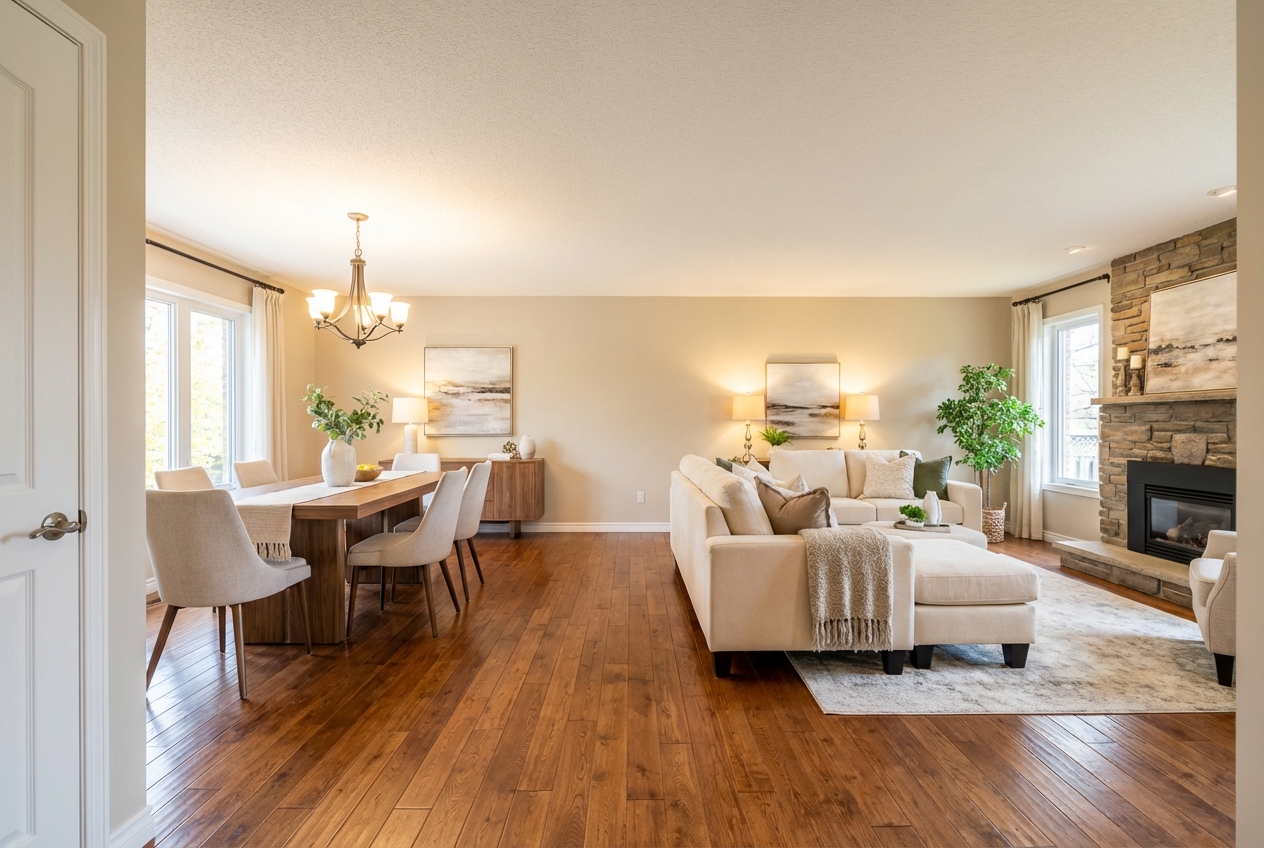
You have probably already tried it. A vacant listing comes in, you open ChatGPT, upload the living room photo, and type something like "add modern furniture to this empty room." The result comes back and it looks... okay. Maybe even good at first glance.
Then you look closer. The hardwood floors turned into tile. The electrical outlet next to the window vanished. The window itself is slightly wider than the real one. The sofa is enormous — scaled for a room twice this size. And the wall behind the dining table went from eggshell to warm gray.
You just created a photo that does not represent the actual property. And if you upload it to MLS, you have a compliance problem.
This is the story dozens of agents are living right now. General-purpose AI tools like ChatGPT, GPT-4, and Midjourney are incredibly powerful for creative work. They are not built for real estate. And the gap between "generates a nice image" and "generates an MLS-safe staged photo" is wider than most agents realize until they have already burned an afternoon on prompts.
The Problem with Using ChatGPT for Virtual Staging
ChatGPT's image generation capabilities have improved dramatically. GPT-4 can take a photo and modify it in ways that look impressive. Midjourney produces beautiful interiors. But when you need a staged photo that accurately represents a specific property, these tools break down in predictable ways.
It Changes the Actual Room
This is the big one. The number one complaint agents and real estate photographers have about using general AI for staging is that it does not just add furniture — it alters the property itself.
Agents on real estate forums describe uploading a bathroom photo and getting back an image where the floor tile is completely different. Others report electrical outlets disappearing, vents being reworked, and wall textures getting smoothed out. One photographer noted that the AI changed the floor material, altered the electrical outlet, and reworked the ceiling vent — all in a single image.
This is not a rare edge case. It happens consistently because ChatGPT and similar models are not trained to distinguish between "things that are part of the room" and "empty space where furniture should go." They treat the entire image as a canvas to be redrawn.
For a mood board or a design concept, that is fine. For a listing photo that will appear on Zillow next to a property description with specific features? It is a liability.
Furniture Scale Is Unreliable
General AI models struggle with spatial reasoning in room photos. They do not know how big the room actually is. They do not understand that the distance from the camera to the far wall is twelve feet, not twenty. The result: a sofa that would be nine feet long in real life, a coffee table the size of a dinner plate, or a dining set that would block the doorway if it actually existed.
Agents have pointed out that they cannot even see the potential in AI-staged rooms because the furniture proportions are so far off. When a buyer looks at a staged photo and the scale feels wrong — even subconsciously — the image hurts more than it helps.
Inconsistent Quality
Maybe one out of every four attempts with ChatGPT produces something usable. The next three come back with artifacts, weird lighting, or rooms that look nothing like the original. You end up regenerating the same photo five or six times, tweaking your prompt each round, hoping this version keeps the walls intact.
That inconsistency is the core issue. You cannot build a reliable listing workflow around a tool that works sometimes. When you have eight rooms to stage and a listing going live tomorrow, you need every photo to come back right the first time.
You Need to Be a Prompt Engineer
Getting decent results from ChatGPT for staging requires specific, detailed prompts. You need to tell it to preserve the flooring. Tell it not to change the wall color. Specify the furniture scale relative to the room. Describe the exact style you want with enough detail that it does not improvise.
Real estate agents are not prompt engineers. They should not need to be. The time spent learning how to coax acceptable results out of a general AI tool is time not spent on the dozen other things that actually close deals — client calls, showings, negotiations, marketing.
MLS Compliance Risk
Every major MLS requires that listing photos accurately represent the property. You can add furniture to a vacant room. You cannot change the room itself. When an AI tool swaps your laminate countertops for marble or turns your carpet into hardwood, those photos are misrepresenting the property's actual condition.
Some agents dismiss this concern. That attitude is shifting as brokerages and MLS boards pay closer attention. Agents in forums are already warning that fines for misleading photos — in the range of several thousand dollars — are coming as AI staging becomes more widespread. California now requires the original unstaged photo to be shown alongside any virtually staged image.
A photo that changes wall colors, floor materials, or room proportions is not virtually staged. It is digitally altered. That distinction matters when you are the one whose license is on the line.
No Before/After Packaging
Even when ChatGPT produces a decent result, you get a single image. There is no paired before-and-after view. No automatic comparison for the listing or for your client's approval. You have to manually arrange photos side by side for disclosure purposes.
That is extra work that adds up across multiple listings — and extra risk if you skip it.
What About Nano Banana Pro?
If you spend time in real estate photography communities, you have heard of Nano Banana Pro. It is the most-discussed AI staging tool among RE photographers, and for good reason. The results can be very convincing. Photographers who know how to prompt it well produce staging that holds up under close inspection.
Nano Banana Pro sits in an interesting middle ground. It gives users more control than ChatGPT over what gets preserved and what gets changed. With the right prompts, you can get it to keep architectural details intact while adding realistic furniture.
The catch: it still requires prompting expertise. The photographers who love it are technical users who have spent hours learning what instructions produce consistent results. They understand how to constrain the model, how to describe furniture placement in terms the AI responds to, and how to iterate when something comes back wrong.
For a real estate photographer building a staging upsell into their business, that learning curve may be worth it. For an agent who needs to stage a listing between showings on a Tuesday afternoon, it is a barrier. The tool is powerful, but it is a tool — not a solution.
What Purpose-Built AI Virtual Staging Does Differently
Purpose-built virtual staging AI is trained specifically for one job: adding furniture to room photos without altering anything else. That specialization changes everything.
Room Preservation Is Engineered In
A general model treats your room photo as raw material to be transformed. A purpose-built staging model treats the room as sacred. Walls, floors, ceilings, windows, outlets, light switches, trim, doorways — all of it stays exactly as it appears in the original photo. The AI only places objects in the empty space.
This is not a prompt instruction that the model sometimes follows. It is a fundamental constraint baked into how the system works. The difference in reliability is enormous.
Furniture Placement Follows Rules
Purpose-built tools understand standard furniture dimensions and room layouts. A sofa goes against a wall, not floating in the center blocking the traffic path. A dining table is scaled to the room it is in. A bed fits the bedroom without touching three walls. Nightstands are nightstand-sized.
These are obvious things to a human designer, but general AI models get them wrong constantly. Staging-specific models are trained on thousands of correctly furnished room photos, so they learn what "right" looks like for each room type.
Consistent Output
When your staging tool is built for staging, you get usable results on the first attempt. Not sometimes. Not if you phrase the prompt correctly. Every time. That reliability is what makes it possible to build a workflow around it — upload photos in the morning, have staged listing images ready by lunch, share with your client before dinner.
No Prompting Required
Upload a photo. Pick a style — Modern Farmhouse, Scandinavian, Mid-Century Modern, Contemporary, Coastal. Get back a staged image. That is the entire workflow.
You do not need to specify "preserve the hardwood flooring" or "do not change the wall color" or "scale the furniture to a 12x14 room." The AI already knows. The style selection replaces the prompt. Three clicks replace thirty minutes of prompt engineering.
Before/After Is Built In
Every staged photo is automatically paired with the original. You get the comparison view without extra work. Your client can see exactly what changed. Your MLS disclosure is handled. California's legal requirement for showing both versions is satisfied by default.
When General AI Makes Sense (and When It Does Not)
General AI tools are not useless for real estate. There are contexts where ChatGPT or Midjourney works fine:
- Social media mood boards where exact room accuracy does not matter
- Design inspiration for renovation planning with a client
- Quick mockups to show a seller what staging could look like before committing
- Personal marketing content that is clearly conceptual, not a listing photo
Where it falls apart is the moment accuracy becomes a professional obligation. MLS listing photos, property marketing materials, client presentations for active listings — anything where the image needs to represent the actual property. That is where you need a tool built for the job.
Why Stagerize Exists
We built Stagerize specifically because agents kept running into this wall. They would try ChatGPT, spend an hour fighting with prompts, get a result that looked nice but changed the room, realize they could not use it for MLS, and end up either paying hundreds to a manual staging service or just listing the vacant photos as-is.
That cycle does not need to exist.
Stagerize is purpose-built for agents who need MLS-safe virtual staging without a learning curve. Upload your property photos, choose from six curated design styles, and get back staged images in minutes — with the room exactly as it is. Every staged photo is paired with the original for before/after comparison. No prompting. No wondering if the AI kept your floors intact. No compliance anxiety.
With photo packs starting at $49 for 15 staged photos, a full listing costs about the same as a couple of months of ChatGPT Plus — and it actually works for its intended purpose every time.
For a full breakdown of how the technology works, read our guide on what virtual staging is. For how it compares to other platforms, see our best virtual staging software roundup.
The Bottom Line
ChatGPT is a remarkable tool. It is just not a staging tool. The same way you would not use a Swiss Army knife to frame a house — technically it has a blade, but that is not what the job calls for.
AI virtual staging done right means the room stays real, the furniture looks believable, the scale makes sense, and you can upload the result to MLS without worrying about a compliance call from your broker. General AI cannot reliably deliver that. Purpose-built staging AI can.
Every hour you spend wrestling with ChatGPT prompts trying to get a usable staged photo is an hour you could have spent on the work that actually grows your business. The tools exist. They are affordable. And they are built for exactly this job.
Try Stagerize free and stage your first property in minutes. See the difference a purpose-built tool makes.