Is Virtual Staging Worth It? A Straight Answer for Real Estate Agents
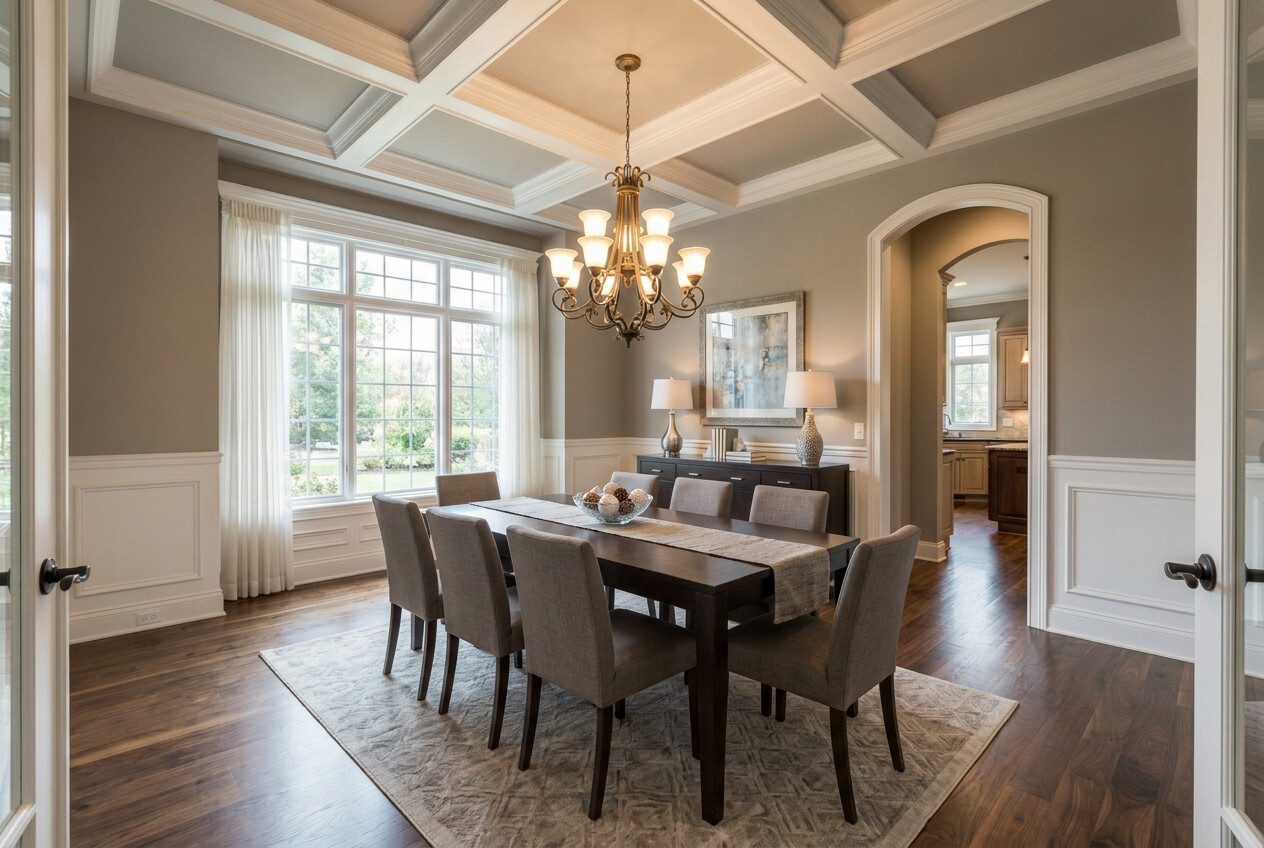
Short answer: yes. But not for the reasons most agents think, and not in every situation.
The conversation around virtual staging used to center on whether it looked "real enough." That debate is over. AI-powered staging tools now produce photorealistic furnished rooms that buyers scroll right past without a second thought — because they look like normal listing photos. The actual question worth asking is simpler: does it make financial sense for your listings?
The math has changed. Dramatically.
The Old Math vs. the New Math
For years, the staging calculation went something like this. Physical staging through a staging service has a median cost of $1,500 per home, according to the NAR 2025 Profile of Home Staging, and larger homes and pricier markets cost more. You're paying for furniture rental, delivery, setup, a designer's time, and a pickup date you need to coordinate around showings and closings.
That price tag meant staging only penciled out on higher-end listings. A $150,000 starter home? Few sellers wanted to spend $1,500 or more on staging. The commission wouldn't cover it. So most vacant listings just went up empty — white walls, beige carpet, echo chambers that photographed like hospital rooms.
AI-powered virtual staging flipped the equation. With Stagerize's photo packs, a staged photo costs between $1.99 and $3.27. An entire property, eight rooms say, can be staged for about $20.
That's not a marginal improvement. That's a category shift. Staging is no longer a luxury-listing strategy. It's a baseline marketing tool for every vacant property you list.
What the Data Actually Shows
The best recent data comes from the National Association of Realtors' 2025 Profile of Home Staging, a survey of agents.
In that survey, 83% of buyers' agents said staging made it easier for buyers to picture the property as their future home. 49% of sellers' agents said staging reduced the time a home spent on the market, and 29% reported a 1% to 10% increase in the dollar value offered. These are agents' reports, not controlled experiments, but they point the same way.
Vacant homes, on the other hand, sit. Buyers have trouble visualizing furniture placement. Rooms look smaller than they are. Empty spaces photograph poorly — they feel cold, institutional. Online, where buyers first see the home, an empty room is easy to swipe past.
None of this is new information. Agents have known for decades that staging works. The barrier was always cost. That barrier is gone.
"Am I Cutting Corners?"
Here's what nobody talks about openly but every agent worries about privately. Scroll through any real estate subreddit and you'll find the same anxiety: using virtual staging feels like cheating. Like you're being lazy instead of doing the "real" work.
This concern is backwards.
Think about it from the client's perspective. You have a vacant three-bedroom listing. The seller can't afford physical staging. Without virtual staging, those listing photos show empty rooms with scuffed floors and overhead lighting. With it, buyers see a warm, furnished space that helps them picture living there.
Which version is cutting corners?
Virtual staging isn't a shortcut around quality. It's giving every listing the presentation it deserves, regardless of the seller's staging budget. The agent who stages a $200,000 vacant condo for $15 isn't being lazy. They're being resourceful. They're doing more for their client, not less.
The agents who should worry are the ones uploading empty-room photos in 2026 because they haven't updated their toolkit.
A Real ROI Example
Let's run the numbers on an actual scenario.
You list a vacant three-bedroom home with eight rooms that need staging: living room, dining room, kitchen, three bedrooms, a home office, and a family room. The asking price is $425,000.
Physical staging cost: about $1,500, the national median for a staging service, and more for a larger home or longer rental
Virtual staging cost: $2-3/photo through Stagerize (photo credit packs from $49)
Eight photos at Stagerize's 40-photo pack rate is about $20. That's a difference of roughly $1,480 before anything else.
Now add carrying costs. Suppose the seller's mortgage, insurance, taxes, utilities, and HOA run about $2,800 a month. If staging helps the home sell even one week sooner, that's about $700 the seller doesn't spend.
These are illustrative numbers, not a promise, but the shape holds: virtual staging costs little enough that even a small effect on time on market pays for it. And you delivered a better-marketed listing without asking your client to write a check before a single showing.
That's not cutting corners. That's smart business. For more on pricing specifics, see our full cost breakdown.
When Virtual Staging Is NOT Worth It
Honesty matters here. Virtual staging isn't the right call for every listing.
Occupied homes with good furniture. If your seller has a well-decorated home with modern, neutral furniture, you don't need virtual staging. Photograph what's there. A real styled room will always beat a digitally furnished one, and there's no reason to replace what already works.
Ultra-luxury properties. At the $2M+ tier, physical staging is part of the experience. Buyers at that level expect to walk into a home that feels like a showroom. The tactile experience matters — the weight of the dining chairs, the texture of the throw pillows. Virtual staging handles the visual, but luxury buyers are buying a feeling. Budget for physical staging on these listings.
Homes with major condition issues. Virtual staging furnishes a room. It doesn't fix water stains, cracked tile, or dated wallpaper. If the space itself needs work, staging photos won't solve the problem. They'll just create a jarring gap between the listing photos and the walkthrough. Address the condition first.
For everything else — the vast middle of the market, every vacant listing, every property where physical staging doesn't make financial sense — virtual staging is the clear play.
The Buyer Pushback Problem (And How to Solve It)
The most common objection agents hear about virtual staging: "Buyers will feel deceived. They'll walk in and be disappointed."
This is a legitimate concern. And it's entirely preventable.
The disappointment happens when buyers see staged photos online, drive to the property, and find empty rooms. That gap between expectation and reality creates frustration. Some buyers describe it as a "huge let down." They're right to feel that way — when it's handled poorly.
The fix is simple: always pair your staged photos with the original empty-room shots. Every listing should include both versions. Label them clearly. "Virtually staged" on the furnished version. The original photo right next to it.
This does two things. First, it sets accurate expectations. Buyers know they're seeing a visualization, not a photograph of existing furniture. Second — and this is the part most agents miss — it actually builds trust. You're showing transparency. You're saying: here's the space as it is, and here's what it could look like with furniture.
That's why we recommend the before-and-after format. The staged photo gets buyers in the door. The original photo keeps the trust intact.
Many MLS systems require virtual staging disclosure, and some states, like California, require access to the original photo. Follow those rules (our compliance guide has details). But go further — make the disclosure obvious, not buried. It protects your client, protects you, and makes the staged photos work harder because buyers trust what they're seeing.
The Bottom Line
Is virtual staging worth it? At a few dollars per photo, the question almost answers itself.
The old debate was about whether virtual staging was "good enough." Today it's good enough to look like a well-staged room in listing photos, for a small fraction of what physical staging costs. For most vacant properties, that's hard to argue against.
Physical staging still has its place at the high end. Occupied homes with great furniture don't need it. But for the everyday vacant listing — the bread and butter of most agents' business — virtual staging is one of the cheapest ways to market the home better.
Not only because it's cheap. Agents in NAR's survey say staging helps buyers picture the home and can shorten time on market. What's changed is that now every listing can have it.
If you're still uploading empty-room photos for vacant listings, you're leaving money on the table. Your sellers deserve better, and at these prices, there's no reason not to give it to them.
Ready to see what virtual staging looks like for your listings? Learn what virtual staging is or check out Stagerize pricing to get started.